What Makes Little Caesars a Leading Quick Service Restaurant in the United States?
What makes Little Caesars one of America's premier quick service restaurants? Explore the operational innovation, value pricing, and pickup technology driving its national success.
Independent Fan Site Disclaimer
This article is part of our independent reference guide. LittleCeasarsMenu.com is a fan-run website and is not affiliated with, authorized, or sponsored by Little Caesars Enterprises, Inc. All registered trademarks, logos, and prices belong to their respective owners and may vary by location.When Americans think of dinner on the go, few concepts rival the sheer efficiency of a modern quick service restaurant. Within the competitive landscape of American food service, Little Caesars has carved out an enduring position as an undisputed powerhouse. By combining razor-sharp operational focus, aggressive value pricing, and game-changing pickup technology, the chain demonstrates what it truly means to lead the limited-service dining segment across the United States.
Direct Answer: What Makes Little Caesars a QSR Leader?
Little Caesars leads the quick service restaurant pizza industry by mastering three operational pillars: eliminating costly dine-in seating to lower overhead, utilizing continuous conveyor ovens and the proprietary HOT-N-READY® system for instant walk-in carryout, and integrating automated heated Pizza Portal® cubbies for contactless mobile pickup. These efficiencies allow the brand to deliver hot, freshly baked meals in under 60 seconds at prices significantly below standard restaurant benchmarks.
Understanding the Quick Service Restaurant (QSR) Model
To evaluate Little Caesars' industry standing, it is essential to first understand how the food service sector categorizes dining establishments in the United States.
Defining Quick Service vs. Full-Service and Fast Casual
The restaurant landscape is broadly divided into three primary operational tiers:
- Quick Service Restaurants (QSR): Establishments engineered around maximum fulfillment speed, highly standardized food preparation, counter or drive-thru ordering, and off-premise consumption. Table service is nonexistent, eliminating tipping requirements and dining room delays.
- Fast Casual Restaurants: Venues that bridge fast food and casual dining. They feature counter-ordered customizable meals prepared along an assembly line, slightly elevated ingredient profiles, and stylish seating areas, but at noticeably higher price points and longer preparation times.
- Full-Service Restaurants (FSR): Traditional dining establishments with host stands, seated waitstaff, printed multi-course menus, bar programs, and longer ticket cycles (typically 45 to 75 minutes per visit).
Core Characteristics of Limited-Service Dining
A successful limited-service restaurant thrives on operational velocity and cost predictability. By focusing on core menu offerings that share overlapping pantry staples (such as fresh pizza dough, vine-ripened tomato sauce, and 100% real mozzarella cheese), a leading quick-service restaurant minimizes inventory waste, expedites kitchen cross-training, and maintains steady margins during fluctuating economic cycles.
How Little Caesars Revolutionized Pizza in the Quick Service Industry
Founded in 1959 by Mike and Marian Ilitch in Garden City, Michigan, Little Caesars did not merely adapt to the quick-service restaurant industry—it actively re-engineered how Americans purchase pizza.
The Off-Premise Storefront Architecture
Historically, pizzerias were social dine-in halls complete with vinyl booths, arcade games, and salad bars. While charming, these physical amenities generated immense real estate overhead, required dedicated waitstaff, and accumulated substantial custodial expenses.
Little Caesars made the calculated strategic choice to transition its franchise network into streamlined, carryout-centric storefronts. By occupying compact retail spaces (often 1,200 to 1,500 square feet) in neighborhood strip centers, franchisees drastically slashed rental overhead and utility costs. Those commercial savings are directly passed to consumers through the affordable Little Caesars menu prices that define the brand today.
The Breakthrough of the HOT-N-READY® Model
In 2004, Little Caesars launched what remains arguably the most influential operational innovation in modern quick-service dining: the HOT-N-READY® promise.
Before this initiative, ordering a pizza anywhere in America required placing a phone call and waiting 20 to 35 minutes for baking and packaging. Little Caesars upended this bottleneck by forecasting customer foot traffic and pre-baking large round pepperoni and cheese pies alongside Crazy Bread®, holding them in specialized precision-moisture warming cabinets at 165°F. For the consumer, pizza transformed into a true grab-and-go experience: walk in, pay at the counter, and walk out with piping-hot dinner in under 60 seconds.
Technology and Automation: The Heated Pizza Portal® Era
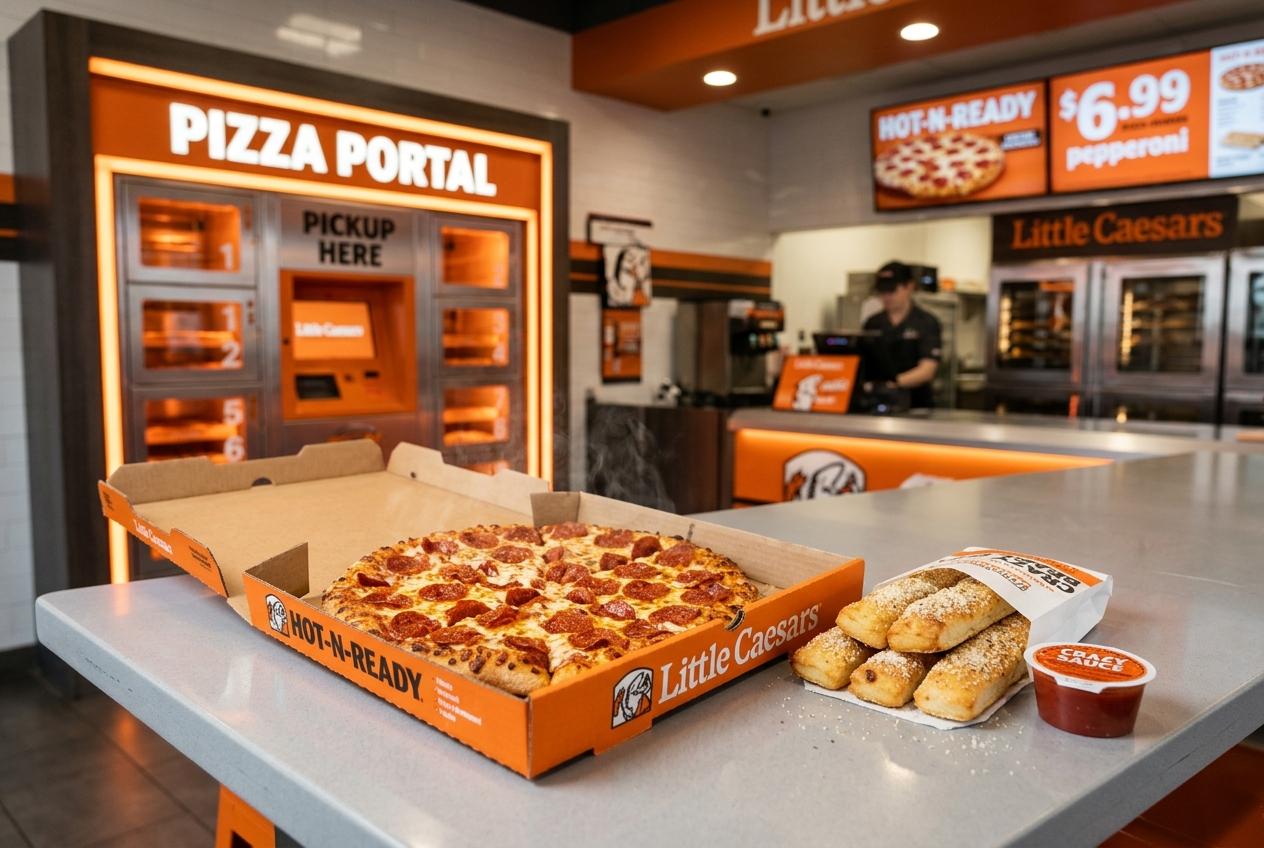
As digital ordering accelerated across the United States, Little Caesars recognized that modern consumers demanded speed without lobby congestion. In 2018, the chain unveiled its patented Pizza Portal® technology.
Mobile Ordering and Seamless Contactless Carryout
The Pizza Portal system integrates directly with the brand's mobile application and web ordering platform. When a customer customizes their pie—whether requesting a Detroit-Style Deep Dish, Stuffed Crust, or specialty toppings—the kitchen staff bakes the order and places it directly into an automated, heated locker facing the front lobby.
The customer receives a push notification and a 3-digit pickup PIN or QR code. Upon arrival, they bypass the register line entirely, scan their phone at the portal screen, watch the automated compartment door slide open, retrieve their hot meal, and depart. The entire interaction takes less than 15 seconds.
Eliminating the Front-of-House Wait Time
By separating customized mobile pickups from impromptu HOT-N-READY walk-in customers, Little Caesars resolved the primary friction point of the quick service restaurant industry: counter congestion. Kitchen staff can focus entirely on dough stretching, topping assembly, and conveyor oven rotation without fielding ordering lines.
The Economics of Value: Why QSR Pizza Remains Affordable in the US
Maintaining accessible pricing amidst nationwide inflation has challenged every dining sector. Little Caesars maintains its competitive edge through structural economic advantages:
High-Volume Operational Efficiency and Supply Chain Mastery
Unlike fragmented independent restaurants that purchase raw ingredients through third-party food distributors at premium rates, Little Caesars operates its own vertically integrated distribution network: Blue Line Foodservice Distribution. This proprietary logistics arm delivers custom flour blends, high-grade California tomato sauce, and dairy direct to store doors, controlling food costs and guaranteeing recipe consistency across thousands of domestic locations.
No Tipping Overhead and Direct Consumer Cost Savings
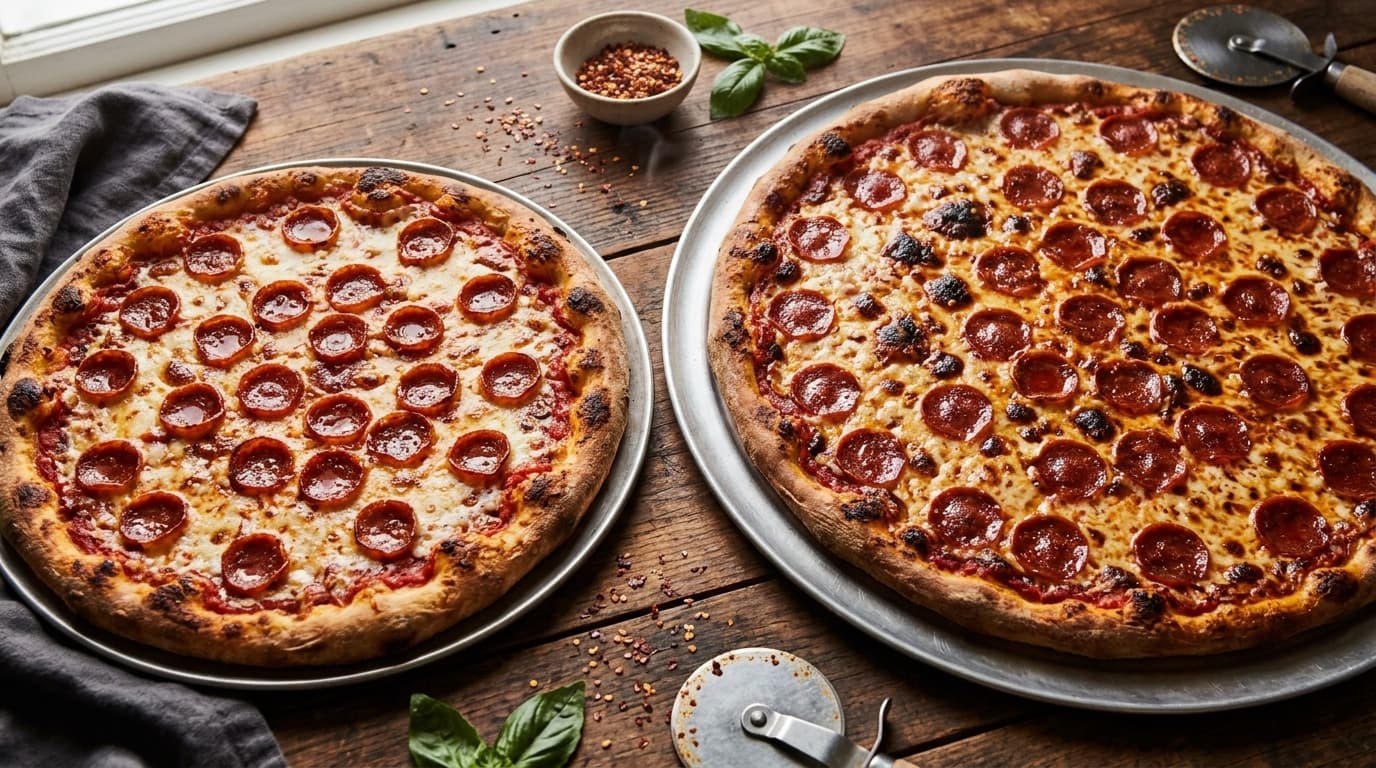
At a conventional sit-down pizzeria, an American family must budget for 18% to 22% server gratuities, fountain drink markups of $3.50+ per glass, and local dining service fees. In contrast, quick-service carryout at Little Caesars involves zero mandatory service fees. Check our comprehensive pizza dimensions and slice breakdown to calculate how much pizza surface area you receive per dollar spent.
Quick Service Dining Matrix: Little Caesars vs. Traditional Pizza Venues
The operational differences between a specialized quick service restaurant model and traditional restaurant dining are highlighted in the comparison matrix below:
| Operational Factor | Little Caesars QSR Model | Traditional Dine-In Pizzeria |
|---|---|---|
| Order Fulfillment Speed | 0–5 minutes (Instant with HOT-N-READY®) | 30–60 minutes (Waitstaff, seating, baking) |
| Ordering Channels | Counter, Mobile App, Pizza Portal®, Delivery | Table service via waitstaff |
| Average Meal Cost per Person | $4.00 – $7.00 | $15.00 – $25.00+ (with drinks & tip) |
| Gratuity / Tipping Expectations | Zero mandatory tip for carryout | 18% – 22% expected server tip |
| Kitchen Baking Equipment | Continuous high-capacity conveyor ovens | Manual stone deck or wood-fired ovens |
| Storefront Square Footage | 1,200 – 1,500 sq ft (High efficiency) | 3,000 – 6,000+ sq ft (Seating & restrooms) |
What to Order at a Quick Service Pizza Restaurant
One hallmark of an elite quick-service brand is maintaining menu depth without sacrificing kitchen velocity. Little Caesars balances speed with crowd-pleasing variety:
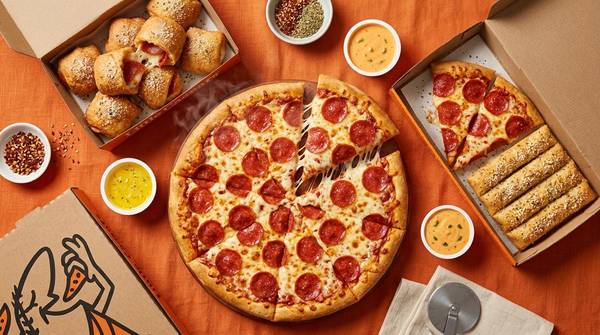
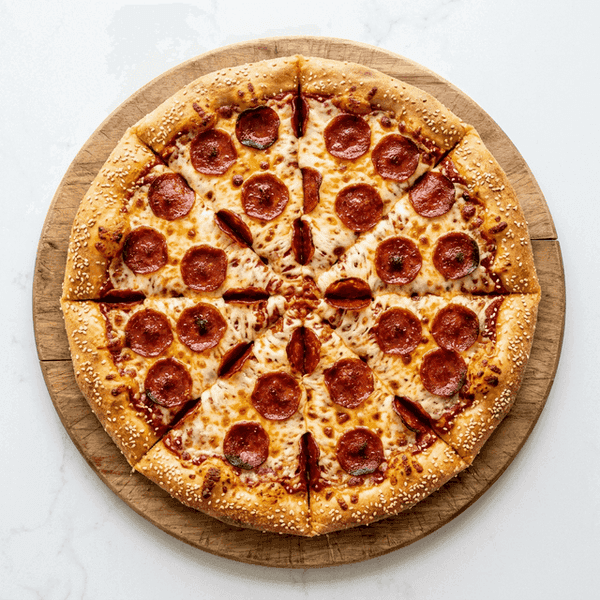
- Classic Pepperoni & Cheese HOT-N-READY®: The quintessential weeknight dinner solution, ready the instant you walk through the door.
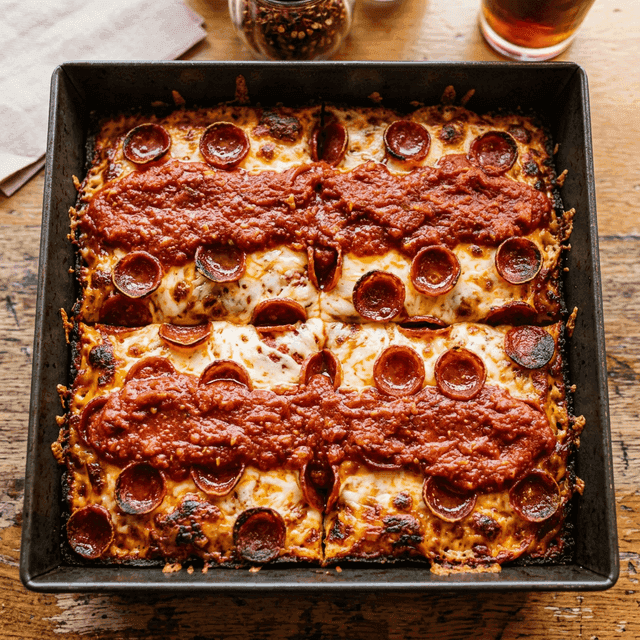
- Detroit-Style Deep Dish: A rectangular, thick-crust specialty with crispy caramelized cheese edges that delivers authentic regional quality at quick-service pricing.
- Crazy Puffs®: Portable, handheld pizza pockets filled with cheese, pepperoni, and Italian seasoning that fit directly into the modern snacking and grab-and-go lifestyle.
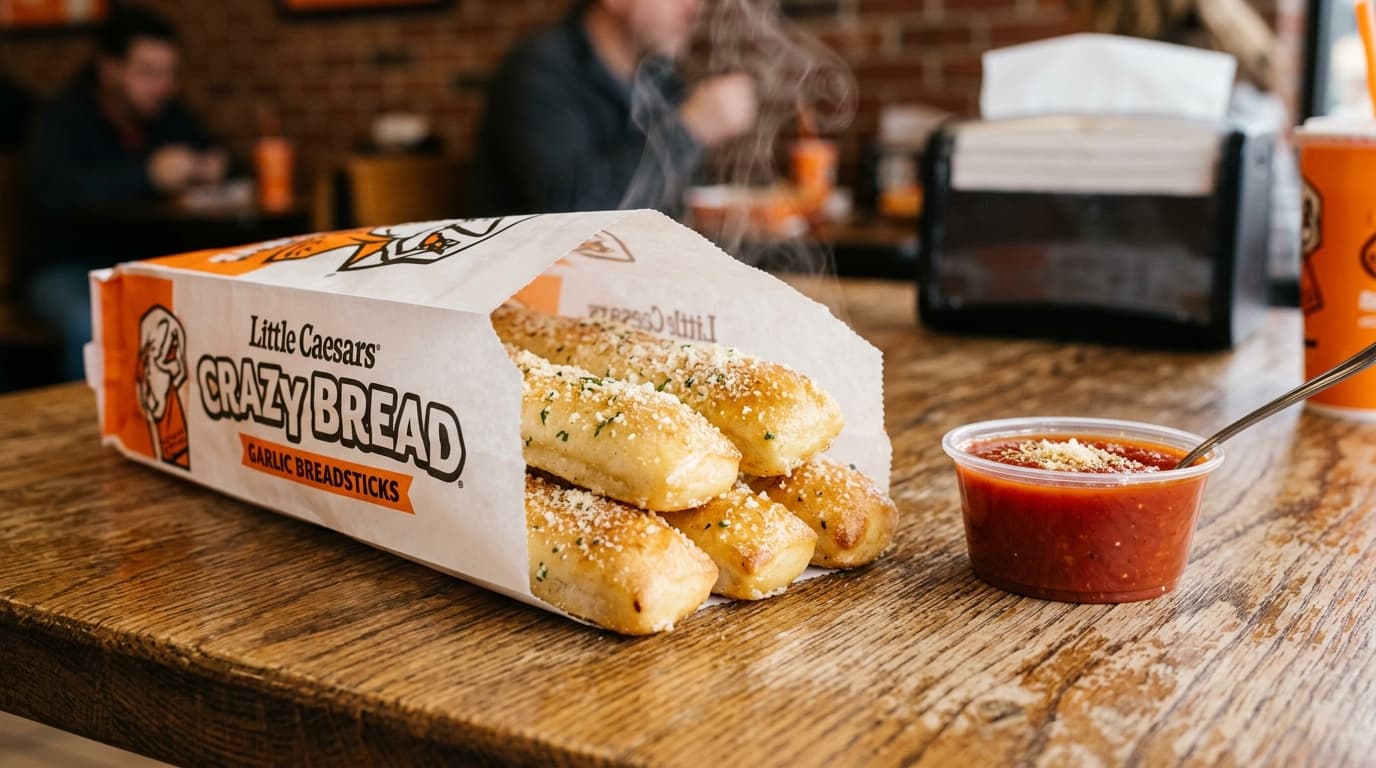
- Crazy Bread® & Caesar Dips®: Freshly baked garlic parmesan breadsticks that serve as an essential side for family meals and game day gatherings. Browse our current Little Caesars deals and specials for bundled meal promotions.
If you are ordering for an office luncheon, school banquet, or children's sports team, our interactive party pizza calculator helps you determine exact pie counts and optimize your budget.
The Future of Quick Service Pizza in America
As consumer lifestyles demand greater speed, digital autonomy, and economic value, the quick service restaurant model will continue to dominate domestic dining choices. By focusing relentlessly on customer convenience, automated pickup infrastructure, and unwavering price accessibility, Little Caesars stands as a case study in how a focused brand can define an entire industry segment across the United States.
Consumer Information & Location Variance Notice
Menu prices, participation in promotional discounts, and availability of specific menu items (including HOT-N-READY® hours) may vary across independent franchise locations throughout the United States. Confirm local operating schedules and pricing through the official Little Caesars digital application or local store counter before ordering.Featured Menu Items in This Guide
Independent Food Service & QSR Industry Analytics
LittleCeasarsMenu.com Editorial Research Team
Researched and fact-checked through nationwide restaurant industry benchmarks, operational service model audits, and official Little Caesars disclosures. LittleCeasarsMenu.com is an independent consumer reference guide not affiliated with Little Caesars Enterprises, Inc.